
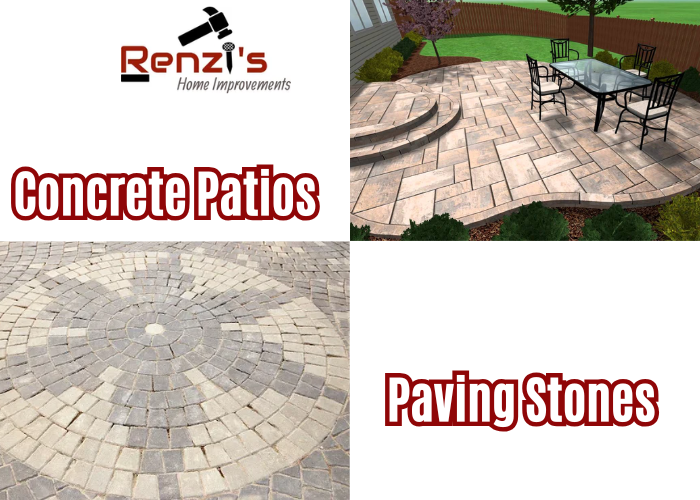
Creating a beautiful and useful outdoor environment begins with selecting the appropriate patio material. Concrete patios vs. paving stones are two options that homeowners frequently have to choose between because they are both long-lasting and aesthetically pleasing. Homeowners often question Renzi’s Home Improvements about which option is preferable for upkeep, attractiveness, and long-term value. Your lifestyle, financial situation, and design objectives will determine the response.
To assist you in making an informed choice for your outside area, this guide dissects the distinctions.
Understanding Paving Stone Patios:
Paving stones, sometimes referred to as pavers, are separate pieces of natural stone, brick, or concrete. To make a solid surface, these stones are fitted together and placed on a base that has been prepared. The wide range of paving stones’ designs is one of their main benefits. Their diverse range of forms, colors, and textures enables homeowners to design unique patterns that improve curb appeal. Additionally, pavers provide a classic style that complements both modern and historic homes. Durability is an additional advantage. Pavers are perfect for locations with temperature fluctuations or soil movement since they are separate sections that can move slightly without breaking.
What Makes Concrete Patios Popular:
A timeless option for outdoor living spaces is a concrete patio. A single slab of concrete is poured, and for decorative treatments, it is subsequently stamped, textured, or smoothed. Concrete patios are more affordable initially than paving stones and are renowned for their neat, uncomplicated look. Homeowners seeking a flawless surface and a speedy installation process will find them particularly appealing. Homeowners may add visual interest without having to pay as much for materials thanks to modern techniques like stamped or stained concrete, which can replicate the appearance of stone or brick at a lower cost.
Durability and Longevity:
Although both concrete patios and paving stones are long-lasting, their performance varies over time. Though concrete is durable and long-lasting, large loads, weather variations, and ground movement can cause it to crack. Repairs may involve replacing portions of the slab after cracks become apparent. Paving stones, however, are better at managing movement. Damaged pavers can be taken out and replaced one at a time without causing any disruption to the surrounding environment. In many settings, this makes pavers a more durable and forgiving choice.
Maintenance and Repairs:
When selecting a patio material, maintenance is a crucial consideration. Concrete patios need to be sealed occasionally to guard against surface wear, moisture, and stains. They might also get discoloration or tiny cracks that detract from their attractiveness over time. Regular sweeping and occasional polishing of joints are necessary for paving stone patios. If pavers are not maintained, weeds may develop between them, although this problem is greatly decreased by careful installation and sealing. The benefit is that, in contrast to repairing cracked concrete, repairs are simpler and less expensive.
Design and Visual Appeal:
Paving stones provide unparalleled visual diversity. To create a distinctive outdoor area that blends in with architecture and landscaping, homeowners can select from a variety of colors, textures, and patterns. Although there are fewer design options for concrete patios, they can nevertheless be made more flexible with ornamental coatings. Concrete that has been stamped and dyed can mimic expensive materials, but if it is not properly maintained, the look may deteriorate with time. Paving stones are frequently the best option if long-term style and visual personalization are top concerns.
Conclusion:
Concrete patios and paving stones are both dependable options for outdoor living areas; nevertheless, which one is best for you will depend on your objectives, financial constraints, and preferred style. Knowing the distinctions ensures that your patio will continue to be useful, appealing, and long-lasting for many years to come.
Renzi’s Home Improvements will assist you in selecting and installing the ideal patio solution for your house if you’re looking to improve your outside area and require professional advice. To realize your outside vision, get in touch with us right now.
FAQs:
Are paving stones more durable than patios made of concrete?
Indeed, because paving stones are easy to fix and don’t break easily, they frequently last longer.
Are paving stones more expensive than concrete?
Although concrete often costs less up front, ongoing maintenance may raise total costs.
Can foot traffic and large furniture be supported by pavement stones?
Indeed, well-installed pavers are very resilient and perfect for patios that are used frequently.
Is it necessary to seal concrete patios?
Indeed, sealing aids in preventing surface damage, dampness, and stains.
Which choice increases a home’s value?
Because of their high-end appearance, paving stone patios frequently increase visual appeal and resale value.