
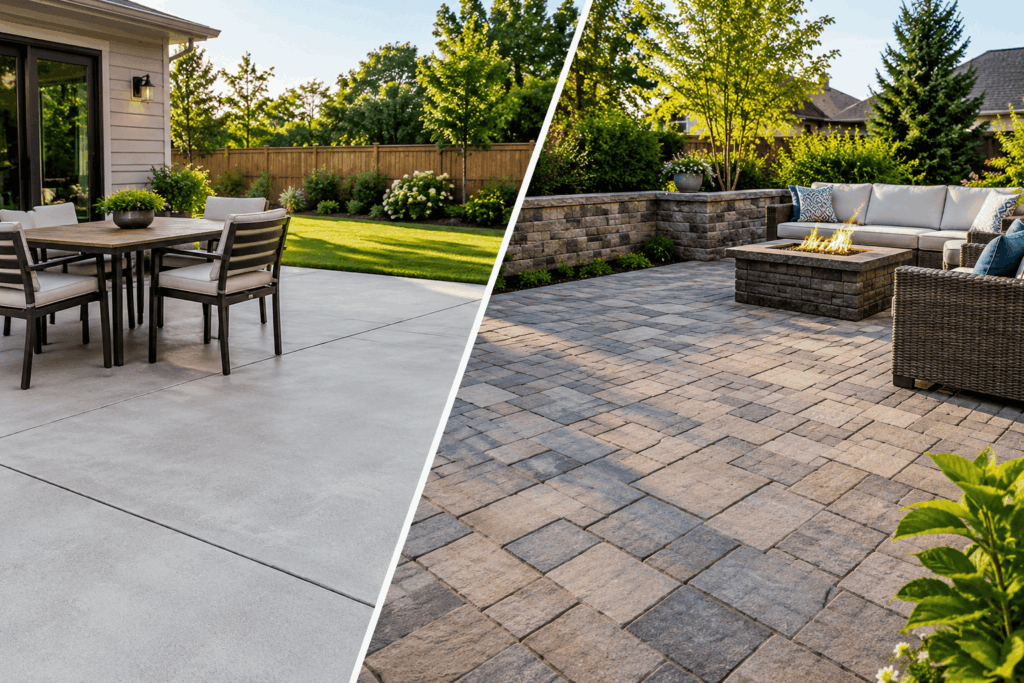
Concrete patio or use pavers: one of the first things homeowners think about while planning a new patio. Both options can create a great outdoor space, but they both differ in cost, installation, durability, and maintenance. It could cost you a lot of money if you’re looking in the wrong places. Renzi Home Remodeling is here to walk you through the process.
Concrete Patio vs use Pavers: The Difference
Concrete Patio: A concrete patio is an outdoor living area made by pouring a mixture of cement, sand, gravel, and water into a prepared space. Once it cures, it creates one solid surface.
Pavers: Pavers are individual pieces of concrete, brick, or natural stone that are laid next to each other over a prepared base to create a patio or other outdoor surface.
| Feature | Concrete Patio | Pavers |
| What It Is? | Poured concrete, often plain, stamped, or stained | Concrete pavers, brick, or natural stone |
| Cost | Usually cheaper upfront | Usually expensive upfront |
| Installation | Faster and more straightforward; concrete is poured and finished as one surface | More labor-intensive; individual pavers are laid over a prepared base |
| Maintenance | Relatively low— may need sealing and crack repairs | Low— damaged pavers can be replaced |
| Lifespan | About 25–30+ years with proper installation and maintenance | About 25–50+ years, depending on material and installation |
| Best-for | Budget-conscious homeowners and simple, modern designs | Custom designs, durability, and easier future repairs |
What Affects Patio Installation Costs?
Several factors can influence patio installation costs regardless of whether you choose
concrete or stone
1. Patio Size:
The larger the patio, the more labor and material you would need. A small, simple patio
can be considerably cheaper than a larger outdoor entertaining area.
2. Site preparation:
If the ground in the area needs to be leveled, excavated, or graded before installation.
Preparation can add to the overall cost.
3. Design and Finish:
A plain concrete surface is usually cheaper than stamped or coloured concrete. With
pavers, intricate patterns, borders, curves,s and different colors can also increase
installation cost.
4. Labor:
Labor is an important part of the overall project. Concrete can be installed relatively quickly,
while pavers require individual placement and careful levelling. This additional work can
add to the cost of the patio.
Concrete vs pavers: pros and cons
Concrete Patio
Pros
- Lower upfront cost
- Faster and simpler installation
- Low routine maintenance
- Smooth, seamless surface
Cons
- Can crack over time
- Repairs can be noticeable
- Large damage may require extensive repairs
- Decorative finishes can increase the cost
Paver Patio
Pros
- Individual pavers can be easily replaced
- Less noticeable repairs
- More design, color, and pattern options
- Better suited to shifting or settling ground
Cons
- Higher upfront cost
- More labor-intensive installation
- Joints may develop weeds or require maintenance
- Pavers can shift or become uneven over time
What is the Better Affordable Patio Material?
If the goal is to find affordable patio materials, standard poured concrete is usually the better starting point, as it can provide a durable outdoor surface without higher labor costs associated with individually installing pavers. But that also does not mean that pavers can be more expensive if you select a budget-friendly. With pavers and a simple design, the price difference may be smaller and can also provide long-term value because individual pavers can be replaced instead of an entire slab in the case of long-term for a homeowner.
Conclusion:
When comparing a concrete patio with pavers, a basic poured concrete patio is generally the more affordable option upfront. It offers a durable, low-maintenance surface and can be installed relatively quickly. However, pavers may provide greater long-term flexibility because individual damaged or uneven pieces can be replaced without repairing the entire patio.
Ultimately, the best choice depends on your budget, design preferences, property conditions, and long-term goals. If keeping initial costs low is the priority, concrete is often the better choice. If you value customization, easier repairs, and long-term flexibility, investing in pavers may be worthwhile. Before making a decision, contact us at Renzi Home Remodeling and consider the full installation costs, including site preparation, labor, materials, and finishing options, to choose the patio solution that best fits your home and needs.
Frequently Asked Questions
Is a concrete patio cheaper than pavers?
Yes, in most cases, a basic poured concrete patio is cheaper to install than a paver patio. The difference mainly comes from material prices and additional labor needed to place individual pavers.
Which lasts longer: concrete or pavers?
Both can last longer if properly maintained, but Pavers have an advantage when it comes to repairs, as they can be easily replaced and removed.
Are pavers worth the extra cost?
They can be worth the extra cost, as Pavers offer more design choices and can be repaired individually. If the homeowners value appearance and long-term flexibility, the higher initial cost may be worthwhile.
What will be the most affordable patio material?
The most affordable patio material depends on the size of the patio. The final cost will depend on the patio size, the preparation labor, and the selected finish.
Can you install pavers over an existing concrete patio?
In some situations, it can be installed over an existing concrete patio, but the condition and drainage of the concrete must first be evaluated. A professional can evaluate whether the existing condition is suitable.